

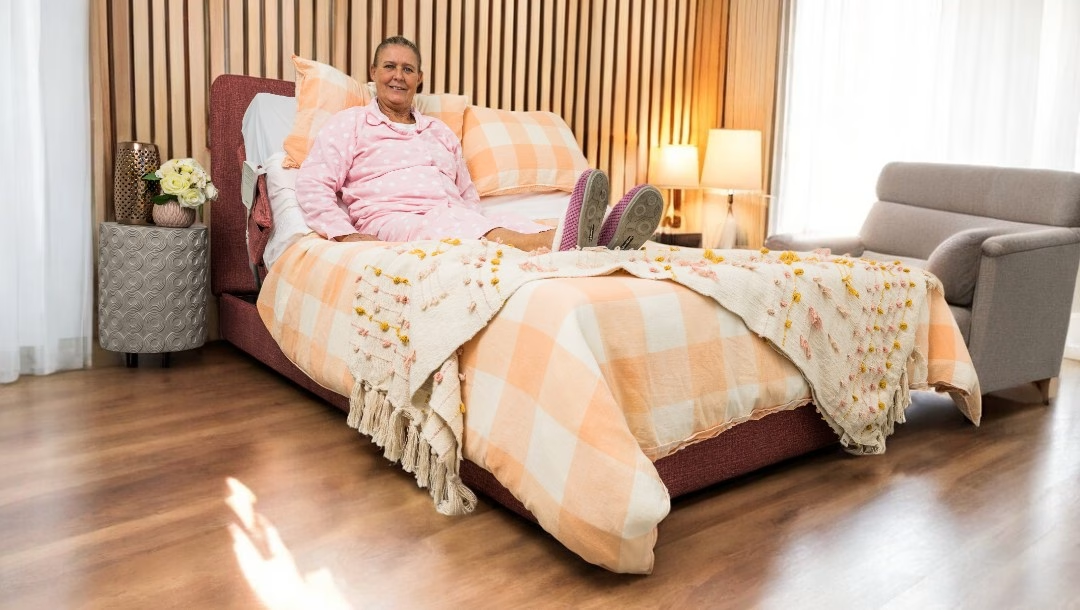
Equipment for a progressive neurological condition should be chosen for the person using it today, with foreseeable changes considered during the original assessment. A diagnosis alone cannot tell an occupational therapist what bed height, seating dimensions, controls or transfer space will work in a particular home. The person’s body proportions, movement, routines, preferences, support arrangements and room all matter.
Novacorr designs and manufactures custom beds and chairs on Queensland’s Sunshine Coast. Our team works with the person, their occupational therapist and supporters to specify equipment around individual clinical, functional, environmental and emotional needs. When circumstances change, some Novacustom configurations or components may be able to be altered after delivery. What is possible depends on the original build and a fresh assessment; it should never be assumed that every change is feasible.
Why might equipment needs change?
A person’s transfer method, posture, movement, communication or support team may change over time. A move to a different room or home can change access for a wheelchair or hoist. A new mattress or positioning plan can affect the height and dimensions that work for the person. These are reasons to revisit the equipment specification, rather than to presume that the diagnosis dictates one permanent setup.
Changes do not follow one timetable. Two people with the same diagnosis can have very different priorities, and those priorities may change in different ways. The person should remain central to each decision, including how the equipment looks and feels in their home.
What should an initial bed or chair script consider?
For a bed, the occupational therapist and manufacturer may discuss body and bed-base length, the relative lengths of the upper-body and upper-leg sections, knee-break position, lowest and working height, mattress fit, rails or covers, castors, hoist clearance and the control method. The room layout and the approach for transfers and daily care matter as much as any single bed dimension. Explore the Novacustom range and the custom HiLo Health Bed for examples of available configurations.
For a chair, seat width and depth, back and arm support, footrest position, pressure-management requirements, controls and the way the person transfers all deserve attention. The right answer is specific to the person. A trial can reveal issues that a catalogue measurement cannot. Novacorr’s information for occupational therapists provides a starting point for working with our team.
What does adaptability mean in practice?
It means asking at the start which features may need review later and what the original configuration can support. Depending on the individual product and assessment, a Novacustom bed may allow changes to components or configuration such as dimensions, section proportions, height, castors, controls, accessories or positioning features. Custom seating may also allow changes to selected dimensions, support features or controls. The team must check compatibility, safety and feasibility for that particular build before agreeing to a modification.
Planning for change does not mean adding every possible feature from day one. It means documenting current needs, foreseeable needs and the reason for each decision. The earlier article on planning equipment before complex needs escalate explains why time for assessment and trials can help.
When is reassessment appropriate?
Ask the treating occupational therapist or clinical team to review equipment when transfers become difficult, posture or pressure-care needs change, the person cannot operate a control reliably, a new hoist or wheelchair is introduced, or the care setting changes. New discomfort, a near miss or an emerging safety concern should also prompt review. Stop using an unsafe setup and follow the treating team’s advice; do not improvise changes to a bed, rail or chair.
For some people, specialist protection is part of the assessment. The Novaprotect range includes Huntington’s equipment, but suitability and configuration still depend on the individual. Charmaine’s Huntington’s Chair story shows the value of understanding one person’s seating priorities; it should not be used as a prescription for someone else.
For a practical list of signs to revisit a specification, see when to reassess a custom bed or chair. The treating team can distinguish a change in fit from a product fault and advise what to do next.
A practical conversation to start with
- What works well in the person’s current bed or chair, and what does not?
- How do they transfer, position, communicate and use controls now?
- What space do the person, wheelchair, hoist and supporters need?
- Which changes are reasonably foreseeable, and which remain uncertain?
- Which parts of the proposed configuration could be reviewed or modified later, subject to assessment?
Novacorr can discuss a person-centred specification with the treating team and identify what may be possible for a particular build. Contact Novacorr about a custom bed or chair assessment or trial; trial availability and format can be confirmed for the person’s location.
Frequently asked questions
Can a custom bed be changed after delivery?
Potentially. Some Novacustom beds can be modified or reconfigured as needs evolve. The available changes depend on the original design, components and a current clinical and technical review. Ask Novacorr to check the specific bed before assuming a modification is possible.
Does a neurological diagnosis determine which bed or chair to buy?
No. A diagnosis informs the assessment, but the person’s movement, dimensions, transfers, environment, preferences and support needs determine the equipment brief. An occupational therapist can help assess and trial the options.
When should an occupational therapist reassess equipment?
When function, comfort, posture, transfers, controls, support arrangements or the environment change, or if a safety concern arises. The timing depends on the individual and their treating team.