

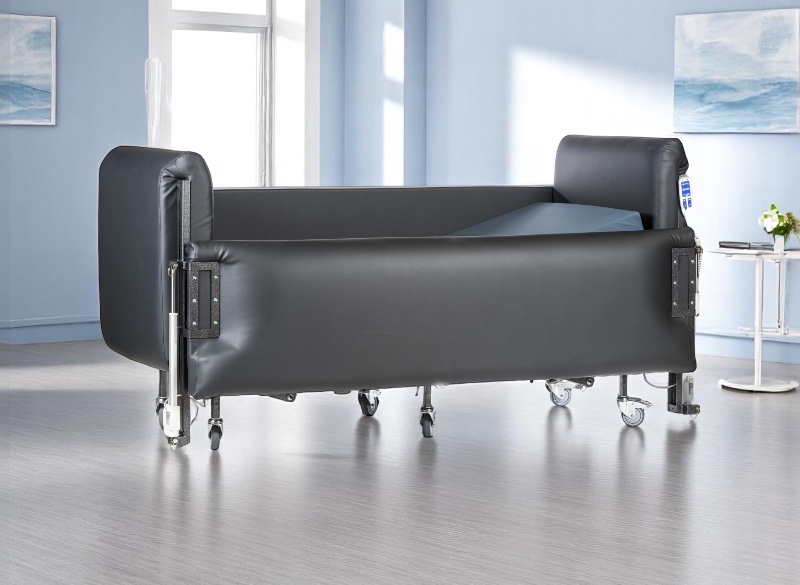
When involuntary movement changes, the equipment review needs to cover tasks as well as posture. A person may use the same bed or chair but now need a different transfer method, more room for assistance, revised positioning or a different way to operate controls. The treating team should observe what happens in the real setting and record which part of the routine is no longer working.
This guide offers questions for a discussion with an occupational therapist and the wider care team. It does not recommend a device from a diagnosis, set a review interval or promise that a particular feature will prevent injury. Novacorr can advise which options are technically possible for its Novaprotect and Novacustom products after clinical requirements are established.
Describe the change precisely
Ask when movement occurs, which body parts are involved, how long episodes last and what tasks become difficult. Is the issue present while sitting, sleeping, transferring or receiving care? Have medication, fatigue, pain, illness or the environment changed? The clinical team should consider causes and treatment. Equipment observations should identify the setup tested and what the person and supporters experienced, without attributing a change to the equipment alone.
If a position or transfer is unsafe now, the treating team should make an immediate care plan rather than wait for a future product trial. Record temporary arrangements and who is responsible for review.
Recheck the seated position
Look at seat dimensions, pelvic and trunk support, the back and head, foot position, arm access, recline, and the person’s ability to use controls. Does movement change contact with the chair or the way the person gets out? Can supporters reach the person without awkward handling? Does the chair still fit in the spaces where it is used?
Novacorr’s Huntington’s Chair has specialist configurations, but the exact setup needs a person-specific trial and technical confirmation. Charmaine’s published chair case study describes one experience; it cannot stand in for another person’s assessment.
Recheck bed positioning and overnight tasks
Review the mattress and supports, body alignment, head and leg positions, bed height, control access and how the person moves in and out. Ask supporters about the overnight routine and any changes they notice. If surrounds, rails or padding are proposed, assess entrapment, access, mattress compatibility, transfers and applicable restrictive-practice requirements together. See the Huntington’s Bed for current product options; do not assume an accessory or dimension is available on every build.
Map every transfer
Write down where the transfer begins and ends, who assists, the direction of movement and the devices used. Test the wheelchair or hoist in the actual room. Check underbed access, chair and bed heights, brakes, turning space, doorways and power leads. A transfer that works in a large showroom may not work beside the person’s other furniture.
If the support team has changed its technique or number of helpers, document that as part of the assessment. The clinical team should determine the transfer plan and training needs. Equipment dimensions can then be checked against it.
Decide whether to adjust, service or re-script
Separate a possible fault from a change in the person’s needs. For a fault or damaged component, arrange an appropriate service review. For a change in posture, movement or transfer method, ask the treating team to reassess the specification. The custom bed and chair reassessment guide explains further triggers. A modified component is possible only if the original build, current product and assessment support it; a complete replacement may sometimes be needed.
Send Novacorr the current model and configuration, the team’s observations, relevant measurements, photos where the person consents, and the proposed care goal. Contact Novacorr to discuss technical options or a trial after the clinical team has set its questions.
Frequently asked questions
Should equipment be changed whenever movement increases?
Not automatically. The clinical team should first assess the change and identify which tasks or positions need attention. A service issue, setup issue or changing care need may call for different responses.
Can padding replace a transfer assessment?
No. Padding does not establish that the person can move safely between equipment or that carers have sufficient access and space.
What should we bring to a review?
The existing product details, dimensions, current transfer plan, observations across the day and night, the person’s feedback, and clear questions for both clinicians and the manufacturer.