

A person-centred equipment script records the individual’s goals, body dimensions, functional needs, transfers, environment, preferences and support arrangements before a bed or chair configuration is agreed. For a progressive condition, it should also separate what is needed now from changes that may be foreseeable. A diagnosis informs the discussion; it does not supply a standard set of dimensions or features.
This guide is for occupational therapists, people choosing equipment and their supporters. Novacorr designs and manufactures custom beds and chairs on Queensland’s Sunshine Coast and works with OTs on Novacustom and Novaprotect scripting. The treating clinician remains responsible for clinical assessment and recommendation; Novacorr can explain product options, manufacturing constraints and whether a proposed configuration can be built or later modified.
Start with the person’s activities and priorities
Before choosing a model, ask what the person wants to do in bed or in a chair, what already works, what is difficult, and which parts of the day matter most. Record their own preferences for comfort, appearance, privacy and control. For some people, the ability to share a room or bed with a partner may matter as much as a technical feature. For others, an accessible hand control or enough room for a familiar transfer method is the immediate priority.
The brief should say whose goal each feature serves. A carer’s working height, for example, is relevant, but it should be considered alongside the person’s own transfer height and preferences. This makes trade-offs visible instead of leaving them to be discovered after delivery.
What information belongs in a bed or chair script?
Clinical and positioning considerations
The OT and relevant treating team identify posture, comfort, skin and pressure-care needs, movement patterns, positioning tolerance and any risks that need assessment. A manufacturer should not infer a particular rail, mattress, tilt function or support from a diagnosis. The script should connect each proposed feature to an observed need and document clinical decisions separately from product availability.
Body fit and functional use
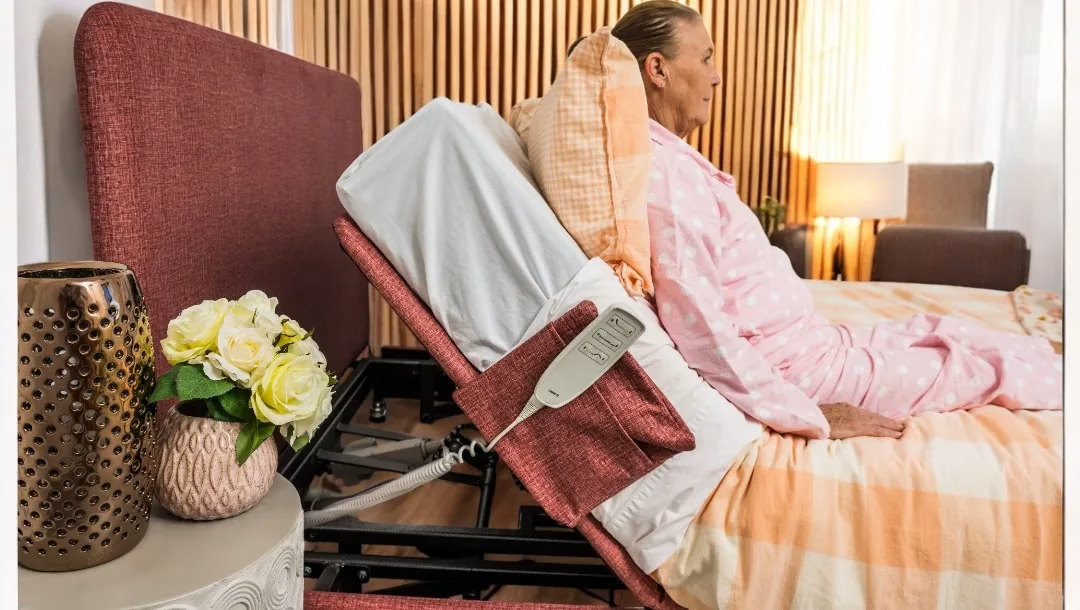
For a bed, record the person’s dimensions and where their torso, pelvis and legs sit in relation to the bed sections. The Novacustom HiLo Health Bed can be discussed with options such as overall size, bed height, section proportions, castors, controls and accessories, subject to the individual build. A mattress and any positioning supports must be considered with the bed rather than as separate measurements.
For a chair, consider seat height, width and depth, back and arm support, foot support, pressure-care requirements, controls and how the person enters and leaves it. A Novacustom 150 Series Lift Chair illustrates the dimensions that can be discussed, but the model and specification still require an individual assessment.
Transfers, supporters and the room
Record the current transfer method and what the person, wheelchair, hoist and supporters need around the equipment. Check actual room dimensions, door access, floor layout, power location and bed or chair placement. If a hoist is used, identify the specific model and clearance required. Note how care will occur at night and whether the equipment needs to move for cleaning or access. An in-home trial can expose constraints that measurements on a product page cannot.
Controls, preferences and daily routines
Who operates each function? Can the person reach and use the control reliably in their usual position? Is a different hand-control position or access method worth assessing? Also record upholstery and finish preferences, personal routines and any features that feel intrusive. These details can affect whether the product works in daily life even when its dimensions are technically correct.
Separate present needs from possible future needs
For a progressive condition, list the needs observed today, changes the treating team considers reasonably foreseeable, and uncertainties that cannot yet be predicted. Ask which original design choices could preserve options for later review. Some Novacustom beds and chairs may be able to have selected components or configurations changed after delivery, but the possibilities depend on the original build, compatibility and a new clinical and technical assessment. Do not promise that a future modification will be possible.
Our earlier guide explains why adaptability matters when neurological needs change. If equipment is already in use, the separate guide to signs that a custom bed or chair needs reassessment helps identify when to revisit the script.
A short scripting record to bring to a trial
- Person and goal: What does the person want the equipment to help them do, and what are their preferences?
- Current function: How do they position, transfer, use controls and complete daily routines now?
- Measurements: Which body, bed, chair, wheelchair, hoist and room measurements were taken, and how?
- Clinical decisions: Which positioning, pressure-care or safety matters need treating-team assessment?
- Trial findings: What was actually tested, in which setting, and what did the person and supporters report?
- Future review: What changes are foreseeable, what remains uncertain, and what would trigger reassessment?
- Technical confirmation: Which options and later modifications has Novacorr confirmed for the specific proposed build?
Novacorr’s occupational therapist information outlines how to start a trial and scripting conversation. The Novacustom range shows relevant bed and chair options. For a published example of listening to one person’s priorities, read Charmaine’s chair story; her choices should not be treated as a prescription for another person with Huntington’s disease.
Who decides the final configuration?
The person and their treating team agree on the goals and clinical requirements. Novacorr can then confirm the technical options, quote the agreed configuration and discuss a suitable trial. Ask for the agreed dimensions and functions to be recorded before manufacture. Contact Novacorr about a custom bed or chair script to discuss the individual situation and trial availability.
Frequently asked questions
Does the diagnosis determine the bed or chair?
No. It can help the team understand possible issues, but the person’s observed function, dimensions, setting, goals and preferences determine the specification.
Can a script allow for future changes?
It can document foreseeable needs and ask the manufacturer which options may be feasible later. Whether a specific change can actually be made requires reassessment and a check of the original product.
Is a trial enough without measurements?
A trial and measurements answer different questions. A trial shows how a proposed setup works in use; measurements document fit, clearance and the agreed build. The OT decides what evidence is needed for that person.