

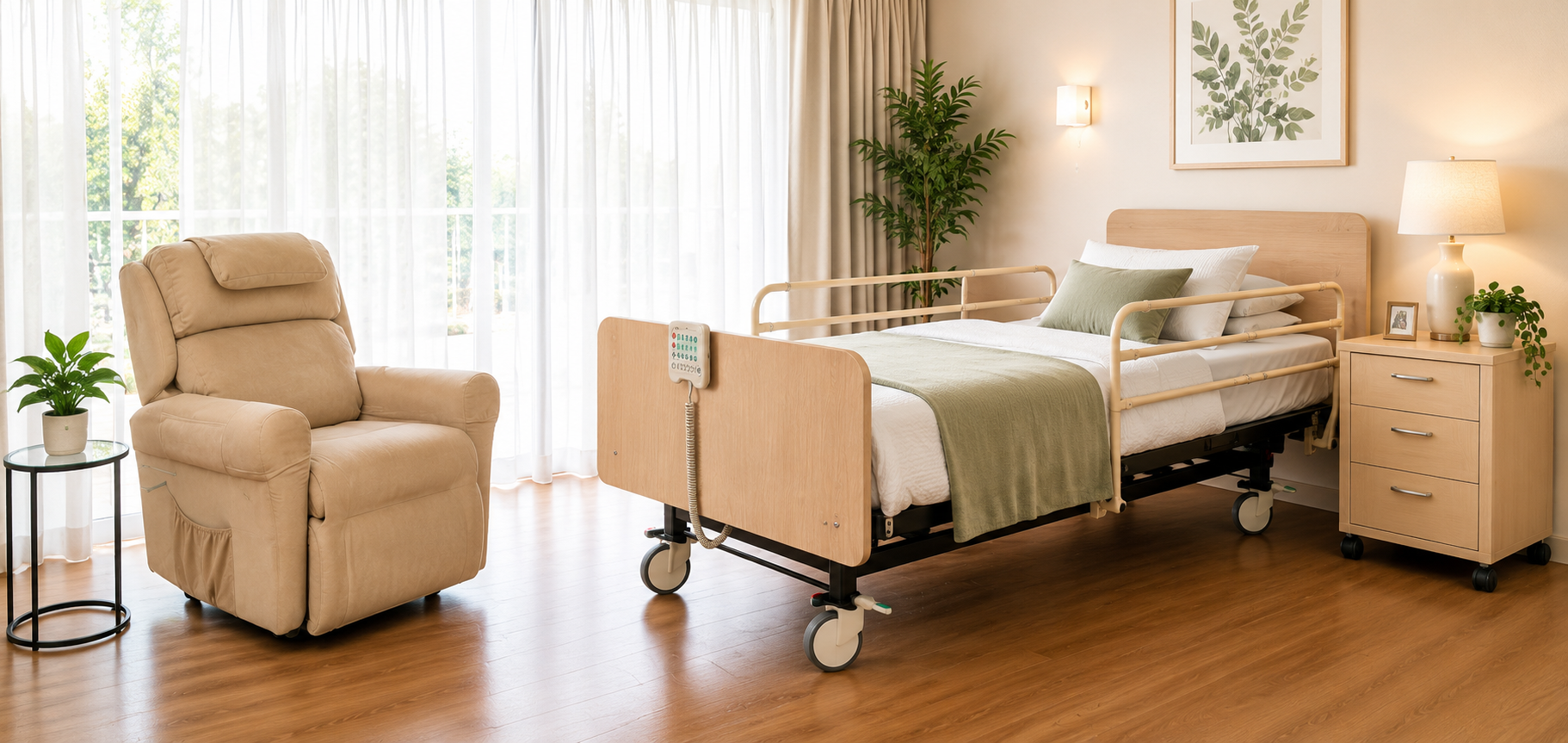
A residential aged-care bed should be chosen for the resident and the care setting together. Bed height, mattress, transfers, room access, staff tasks, cleaning, maintenance and the resident’s preferences all matter. Standardising a facility’s beds can simplify training and upkeep, but some residents need a different dimension, configuration or specialist assessment.
This guide is for aged-care managers, nurses, occupational therapists, facilities and procurement teams. Novacorr manufactures beds and furniture for aged-care facilities in Queensland. The Novamed AC Series is one option to examine for an aged-care room; product choice remains subject to the facility’s clinical review and the resident’s needs.
Begin with residents and room types
List the rooms to be furnished and the care patterns expected in each. A permanent resident room, respite room and higher-dependency room may need different access, positioning and equipment. Record who uses the bed controls, how transfers happen, whether a hoist is used, which side supporters approach and what matters to the resident about appearance, comfort and independence.
Do not use age or diagnosis as a shortcut to a particular bed. A resident’s current function, body dimensions, mattress, room and preferences provide a better starting brief. Reassess when function or care arrangements change.
Compare height and transfer requirements
Ask the OT or relevant clinician to assess the bed height for the resident’s actual transfer method. The bed’s lowest base height is not the same as the effective sitting or transfer height once a mattress and any overlay are added. Check how height adjustment supports staff tasks while preserving a position that works for the resident. Low beds are one consideration in a broader falls-risk assessment; a product cannot be claimed to prevent falls or injuries by itself.
If hoists are used, check the exact hoist’s underbed clearance, leg spread and turning space with the proposed bed and castors. Include the route from the doorway and space for supporters in the room. A sample room layout or on-site trial can reveal problems that a brochure dimension cannot.
Assess mattress, positioning and accessories together
The mattress must fit the bed and the resident’s assessed needs. Consider the total bed and mattress height, the surface’s response to bed articulation, any positioning equipment and the facility’s cleaning approach. Pressure-care decisions belong with the treating team, who should consider skin integrity, mobility, comfort and the broader care plan. Compare the proposed mattress with Novacorr’s available aged-care and home-care mattress options only after the clinical requirements are clear.
Rails and other attachments also need a person-specific assessment, including compatibility, entrapment risk and any applicable restrictive-practice requirements. A facility-wide bed standard should still allow these individual decisions to be made and recorded.
Balance a homelike room with practical care
Residents and families often spend long periods in the bedroom. Ask about bed-end finishes, fabric or vinyl choices, noise and the appearance of the room without losing sight of cleaning and daily staff access. The AC Series page describes customised bed ends intended to blend with residential interiors. Confirm the exact material, dimensions and care instructions for the configuration under consideration.
Include power points, bedside furniture, personal belongings and family seating in the layout. Staff should be able to reach controls and clean around the bed without repeatedly moving other furniture. The resident’s preferences should be recorded alongside clinical and operational requirements rather than treated as a final decorative choice.
What should procurement ask for?
For a facility purchase, request current dimensions and specification for the exact model and options; safe working load; mattress compatibility; cleaning and care guidance; warranty terms; replacement components; service arrangements; delivery and installation scope; and lead time. Ask whether parts of the bed can be repaired or replaced and which options can be changed later. Do not assume every customisation or modification is possible on every original build.
Prepare a room schedule and flag exceptional requirements separately. A standard model can suit many rooms, while a resident with unusual dimensions or complex transfers may need an individual custom bed scripting process. Novacorr’s aged-care page describes project supply and product support, including an 80-bed Beaumont Care project; this is evidence of a facility-scale engagement, not a clinical outcome claim.
Trial and review before a larger rollout
In a representative room, ask residents and clinical, cleaning and maintenance staff to try the proposed setup where appropriate. Observe transfer access, controls, bed movement, castor and brake use, mattress fit, cleaning access and the room’s feel. Record the specification tested and any exceptions. Review the outcome before standardising across a facility. The reassessment guide explains when an individual configuration should be revisited as needs change.
Contact Novacorr about aged-care beds and a facility quote with the room schedule, quantities, desired finishes and any specialist requirements.
Frequently asked questions
Does every aged-care resident need a low bed?
No. Bed height should be assessed against that resident’s transfers, mattress, mobility, care tasks and environment. A low setting alone does not establish that a bed is suitable or prevent a fall.
Can a facility use one bed model everywhere?
A common model may help procurement, maintenance and staff familiarity, provided individual needs are still assessed. Some residents and rooms may require a different size, mattress, accessories or specialist configuration.
What is the difference between buying and fitting out a room?
A room fit-out considers the bed, mattress, bedside furniture, power, cleaning, circulation and personal space together. A product specification alone does not show whether the whole room works in daily use.