

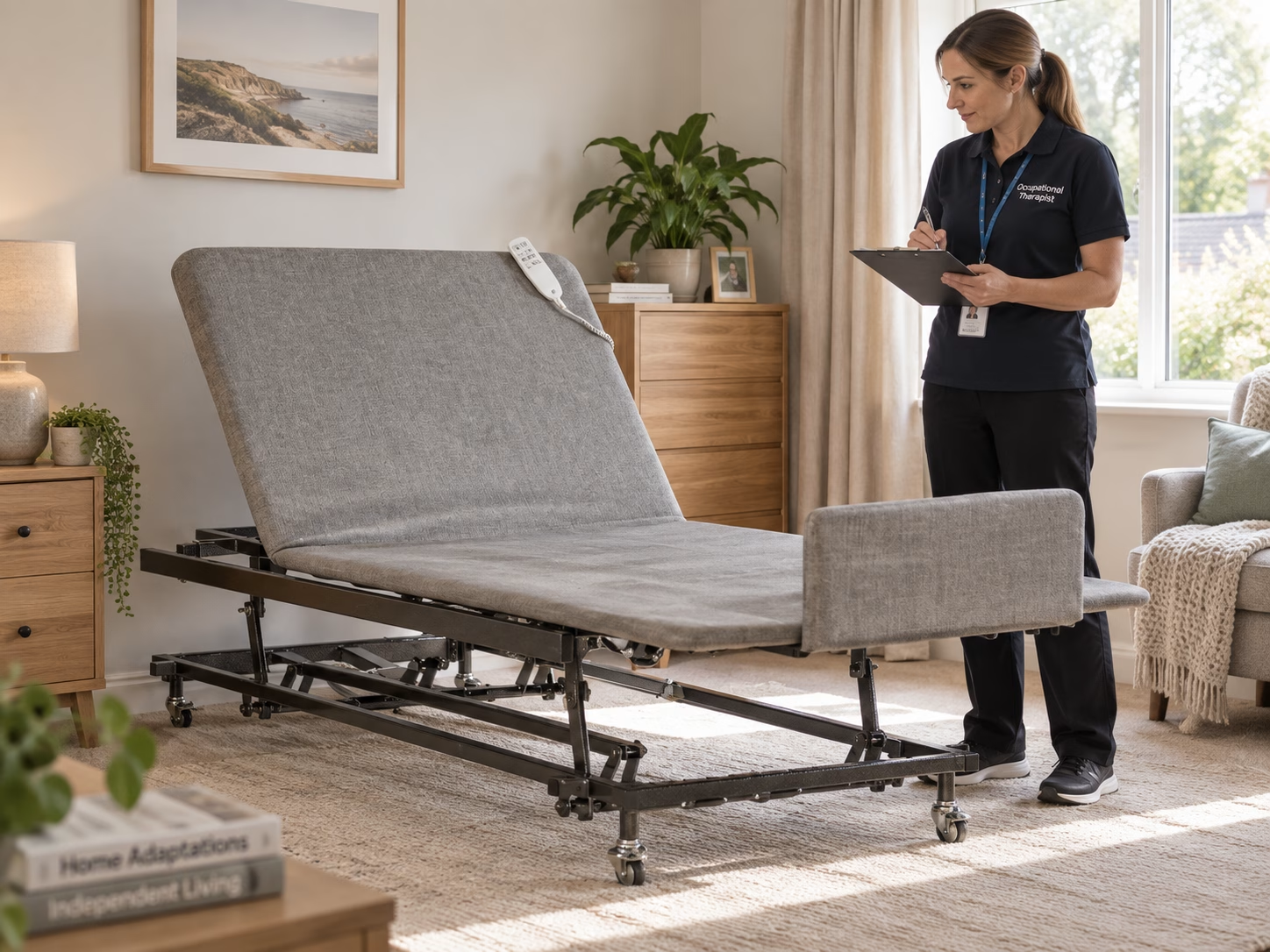
A custom bed assessment should document the person’s goals, body dimensions, positioning and transfer needs, the mattress and equipment that will be used with the bed, and the actual room where it will operate. The occupational therapist decides the clinical requirements with the person and treating team. A manufacturer can then confirm which dimensions and functions are technically available for a proposed build.
This checklist helps OTs, people using the bed and supporters prepare for a trial or specification discussion. It is not a prescription for a particular diagnosis or a substitute for clinical assessment. Novacorr designs and manufactures Novacustom beds on Queensland’s Sunshine Coast; a custom specification can be discussed for an individual person and environment.
Start with what the person needs to do
Record the person’s own priorities: sleeping, resting, sitting up, moving in bed, transferring, using controls, sharing a room with a partner, and receiving assistance. Which tasks work in the current setup, and which are difficult? Ask about appearance, privacy and what feels comfortable in their home. Note who is present overnight and how often the bed needs repositioning or moving.
For a progressive condition, separate observed needs from plausible future changes and uncertainty. The person-centred scripting guide sets out how to record those distinctions. A diagnosis alone does not provide a standard bed size, rail arrangement or control method.
What should be measured?
The person and the mattress
Measure the person’s height and relevant body proportions in the positions used for assessment, not only their standing height. Check where the shoulders, pelvis, thighs and lower legs will sit relative to the backrest and knee-break sections. Record any positioning support and the mattress proposed, including its dimensions and how it affects effective transfer height. The OT and treating team should assess pressure-care and skin considerations; neither a bed nor a mattress can be assumed suitable from a diagnosis.
Bed dimensions and working height
Record the proposed overall length and width, base-section proportions, lowest and highest required working positions, bed-end clearance and any height added by castors or the mattress. Compare the person’s own transfer height with the height supporters need for care tasks. A very low position may help one part of the routine yet make a particular transfer harder. Check the actual configured dimensions and options with Novacorr’s HiLo Health Bed team rather than relying on a nominal model name.
Transfers, wheelchair and hoist
Document whether transfers are independent, assisted, standing, lateral or hoist-supported; where the wheelchair or mobility aid must be placed; and which side of the bed is used. If a hoist is involved, record its make and model, leg spread, required underbed clearance and turning space. Check whether the bed base, castors, rails or accessories affect access. A future change in transfer method may alter the specification and should trigger reassessment.
Room and access route
Measure the room, doors, hallways and turns along the delivery route. In the room, map power points, floor surface, furniture, bedside equipment, access for supporters and any partner bed. Measure with the bed reclined or raised as well as flat, as movement changes the clearance required. Leave workable space for cleaning and emergency access according to the setting’s requirements. Photos and a simple dimensioned floor plan can help the manufacturer understand constraints, with the person’s permission.
Check controls and safety features in use
Who will operate height, head and leg functions, and from which position? Trial reach, grip, vision, comprehension and reliable operation of the actual control arrangement. Discuss alternative control access only where the particular product can support it and the treating team considers it appropriate.
Rails, bed sticks, bumpers and positioning supports require an individual risk assessment. Consider entrapment, movement patterns, transfer method, mattress compatibility and any legal or organisational requirements for restrictive practices. A rail should never be specified automatically because someone has a particular condition. Ask for the exact proposed accessory and compatibility information rather than assuming options on one bed fit another.
Observe a trial, then record the result
A useful trial tests the important tasks: entering and leaving the bed, finding a comfortable position, sitting up, using controls, receiving assistance, moving a hoist and navigating the room. Record the trial bed’s dimensions and setup so findings are not mistaken for proof that a differently configured bed will behave identically. Note the person’s feedback, the OT’s observations and any unresolved questions. Novacorr’s occupational therapist information explains how to discuss a trial and custom requirements.
The NDIS asks for evidence of what assistive technology was trialled and considered where an assessment is required; current requirements depend on the item’s cost and risk. Use the NDIS’s current assessment guidance for funding evidence rather than assuming the same form applies to every purchase. The clinical record should still make sense to the person and team even when funding comes from another source.
A brief to send to the manufacturer
Include the person’s goals and preferences; clinical decisions made by the treating team; body and room measurements; transfer and hoist information; mattress and accessories; preferred dimensions, height and control access; trial findings; foreseeable changes; and questions that remain open. Specify what is essential and what is a preference. Ask Novacorr to confirm technical feasibility, exact dimensions, compatibility, quote and any options that might be revisited later. Future modifications depend on the original build and a later review, as explained in the bed and chair reassessment guide.
Contact Novacorr about a custom bed assessment or trial with the person’s consent and the information needed for a useful response.
Frequently asked questions
Is a standard mattress size enough to specify the bed?
No. Mattress dimensions matter, but body proportions, bed-section positions, transfers, room access and care tasks also affect the brief. Confirm the selected mattress and bed work together.
Should a trial happen in the person’s home?
An in-home trial can reveal room and transfer constraints that a showroom trial may miss. Its availability and format depend on location and the proposed equipment; ask Novacorr what is available. If a trial occurs elsewhere, document the differences from the real setting.
Can a custom bed be changed later?
Some Novacustom configurations may allow selected components or functions to be changed after delivery. The manufacturer must check the original build and technical compatibility, and the treating team should reassess the person’s current needs. A later modification cannot be promised in advance.