

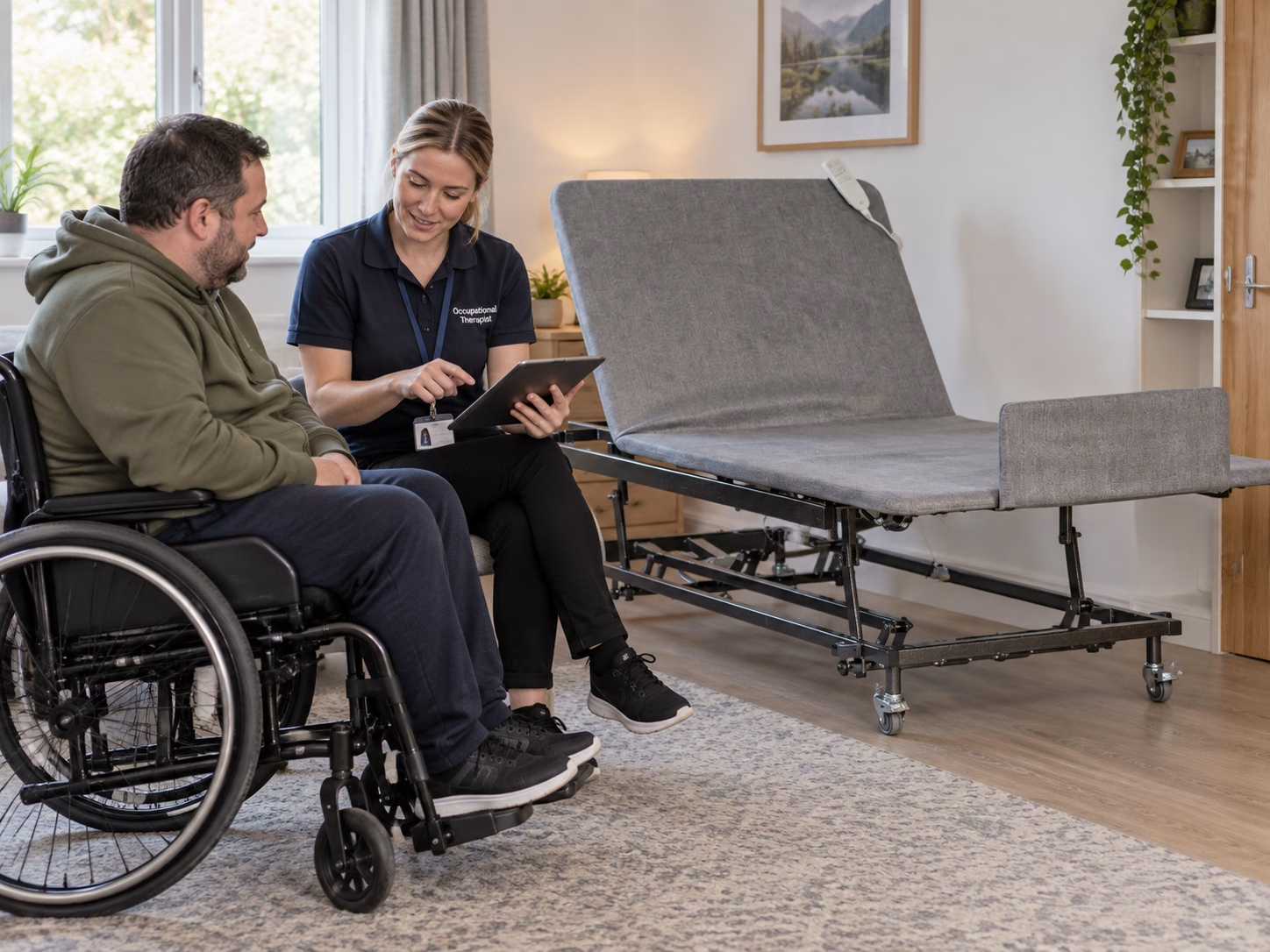
An in-home bed trial is most useful when it tests the person’s ordinary tasks in the actual room. The trial is a chance to see how the bed, mattress, equipment and people work together. Before it starts, agree which questions the occupational therapist and person need answered, then record the exact configuration tested.
Novacorr offers trials for suitable Novacustom and Novacare equipment, with availability depending on the product and location. Ask the team what format can be arranged; a video demonstration may help answer some questions, while a physical trial is needed to observe fit and transfers in the home. The treating team remains responsible for clinical decisions.
Prepare the room before the trial
Measure the access route, doorways, turning points and the planned bed position. Note power, flooring, bedside furniture, a partner bed, and where a wheelchair or hoist needs to go. Make a short list of the current problems and the tasks to try. If the person’s own mattress, overlay or hoist will be part of the final setup, ask whether those can be present or how differences will be accounted for.
Novacorr’s occupational therapist information helps frame a product and trial discussion. Trial staff can explain product operation; the OT should identify the measurements and tasks that matter for the person.
Watch the bed in the positions actually used
Test the lowest, transfer and care heights with the proposed mattress height in mind. Observe sitting up, knee-break or leg positions where relevant, lying down and moving in bed. Can the person reach and use the control from each position? Can supporters reach the person and the controls? Ask whether the bed’s moving sections align with the person’s body proportions and whether bedding or nearby furniture interferes.
Do not treat a manufacturer’s nominal lowest base height as the person’s actual transfer height. The mattress and any overlay add height. Equally, a low bed is not a complete falls plan. The treating team should consider the wider environment and care arrangements.
Test transfers and equipment access
Observe the normal transfer method with the clinical team’s supervision. Check the wheelchair position, approach side, bed edge, standing or lateral movement, and space for supporters. If a hoist is used, test its exact base and spread beneath the bed, turning path and the clearance required. Check brakes and castor movement as part of the setup, according to the manufacturer’s instructions.
If a transfer cannot be safely trialled, record why and what information is still required. A successful transfer with a different mattress, hoist or room arrangement should be documented as a limited finding, not treated as proof of the proposed final configuration.
Ask about comfort, controls and appearance
Invite the person to describe comfort and practical ease, including how the bed looks and feels in their room. Ask supporters what changes for everyday care, cleaning and access. Check hand control reach, grip and understanding, and discuss alternative controls only where suitable for the proposed build. If rails or other accessories are being considered, the treating team should assess compatibility, entrapment, transfers and applicable restrictive-practice requirements. A rail should not be added simply because it was available on the trial bed.
Record findings and remaining questions
Write down the make, model, tested size, mattress, bed height and functions, controls and accessories. Separate observed results from the person’s impressions and the team’s outstanding questions. Note every difference between the trial unit and quoted build. Ask Novacorr to confirm dimensions, technical options, compatibility, delivery requirements and what can be changed later. Our bed and chair reassessment guide explains why later changes require a new review.
The trial may support a funding application or clinical report, but it does not replace the OT’s clinical reasoning. Contact Novacorr with the trial questions and the suburb to discuss the available product and format.
Frequently asked questions
Is a video trial enough?
It can show functions and answer some questions. It cannot fully demonstrate the person’s fit, transfer height, hoist clearance or room access, so document what still needs physical assessment.
Should I trial the mattress at the same time?
Where possible, test the intended mattress or record how a substitute changes height and bed articulation. Mattress suitability and pressure-care needs require the treating team’s assessment.
Does a good trial guarantee the final bed will feel identical?
No. Check the final quoted dimensions, mattress, upholstery, controls and accessories against the exact unit trialled. A custom build may differ in ways that matter.