

By Novacorr Healthcare · 24 September 2026
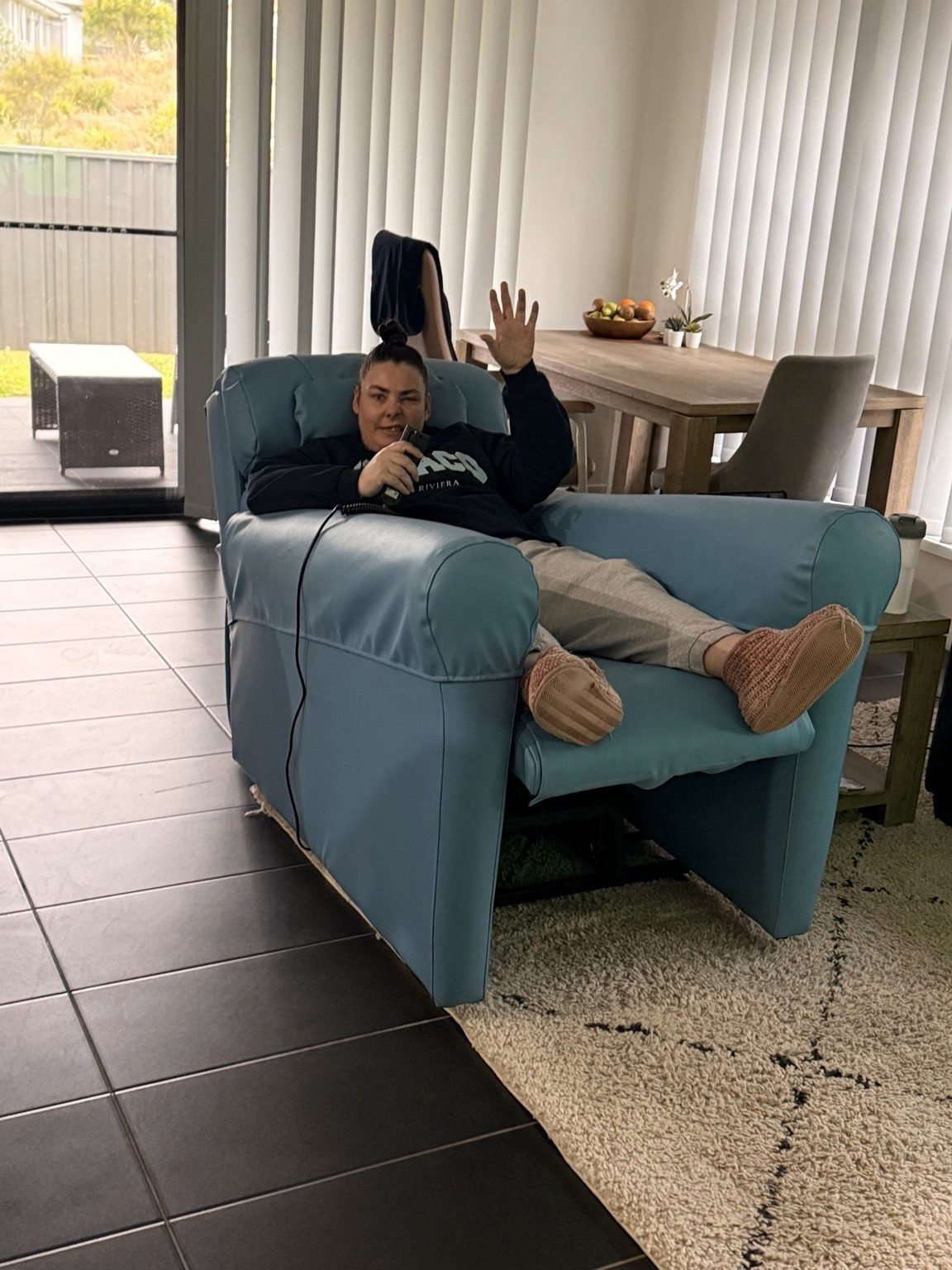
For occupational therapists, support coordinators and care teams, a seating discussion needs to connect observed difficulties with the person’s priorities. Charmaine’s experience offers a useful example of how to document that process without confusing early impressions with established results.
Before delivery of her NovaProtect Huntington’s Chair, Charmaine’s support team described previous recliners as no longer suitable as her Huntington’s progressed. They recorded involuntary movement, difficulty maintaining position and prompting to reposition. On delivery day, Charmaine said: “It’s comfy. I feel a lot safer.”
The full Charmaine case study sets out the background and her response. Here, the focus is on the questions that experience raises for assessment, trialling and follow-up.
Describe the problem before selecting features
A clear starting record helps everyone understand why a different chair is being considered. Describe what happens in the current chair, when difficulties arise, what support is provided and what the person says about it.
For Charmaine, the support team’s priorities included comfort, positioning, relaxation, safety, transfers and easier support for staff. Those priorities provide useful follow-up questions; they should not be presented as improvements simply because a new chair has been delivered.
Assess movement and positioning individually
Seat dimensions, support for the body and the effect of different positions require individual assessment. Involuntary movement alone does not determine the right chair or configuration. The Huntington’s Disease Association’s occupational therapy clinical tips emphasise an individual, flexible assessment and the need to test seating settings rather than rely on measurements alone.
An assessment can consider whether the person can settle comfortably, how their position changes and what prompts or assistance they need. Comfort and the person’s sense of safety belong in that discussion alongside the clinician’s observations.
Include transfers and the support team
Getting into and out of the chair deserves its own assessment. Discuss the person’s transfer method, any equipment used, the space available and the assistance required. A chair’s movement functions do not by themselves establish that a transfer is safe for a particular person.
Document which settings and support arrangements have been agreed, and make sure those using the equipment know how to operate it. Charmaine’s questionnaires identify transfers and staff support as goals, but do not establish a delivery-day improvement in either area.
Make the trial answer useful questions
Charmaine’s earlier trial was described as a brief sit in the chair, which she loved. That is valuable feedback about her initial response. It is not the same as observing use across a usual day.
Before a trial, agree what needs to be explored: settling into the chair, positioning, comfort, transfers and the person’s own preferences. Ask the supplier what trial arrangements are available and discuss the assessment with the treating OT.
Novacorr Healthcare manufactures the NovaProtect Huntington’s Chair in Australia. You can enquire about a trial and explore the broader NovaProtect range.
Keep first impressions and follow-up separate
On delivery day, Charmaine’s recorded response was that she did not need to move all the time compared with her old chair. This is a personal first impression, not a measurement of involuntary movement or proof of a clinical effect.
A later review can return to the original goals: what is working, what still needs adjustment, and what assistance is required in daily use? Record Charmaine’s own comments alongside observations from her support team.
For a family-focused discussion guide, see Choosing a Chair for Someone with Huntington’s Disease.
Charmaine’s experience comes from her pre-delivery and delivery-day questionnaires. This article supports discussion with a treating clinician; it does not prescribe a chair or seating position for an individual.