

The lowest purchase price does not describe the full cost of a hospital furniture asset. Procurement teams also need to know how a product will be cleaned, maintained, repaired, moved and eventually replaced. The questions should be asked for the exact model and specification being quoted, because parts and service options can differ across a range.
Novacorr manufactures Novamed hospital furniture in Queensland and supplies hospitals through its health systems pathway. This checklist can be used with any proposed supplier. It does not claim that every Novacorr product has the same serviceable components or warranty.
Define the job before comparing bids
List the rooms, users and tasks for each item. A ward bed, patient recliner, maternity chair and waiting-area lounge face different demands. Specify dimensions, safe working load where relevant, upholstery, controls, accessories, cleaning process, delivery route and clinical review requirements. Separate essentials from preferences so quotes describe comparable configurations.
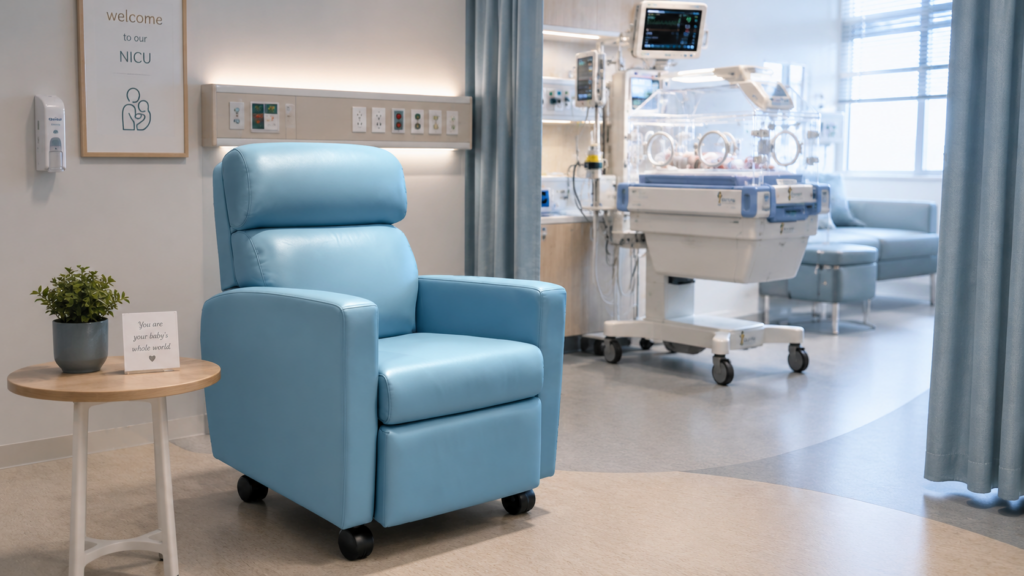
For example, a patient recliner needs a room and transfer assessment as well as a colour choice. A breastfeeding chair may be tested for parent comfort, movement and unit cleaning. A lounge should fit its circulation and seating brief.
Ask what maintenance actually involves
Request written care instructions for the chosen upholstery and finish. Check them against the hospital’s approved cleaning products and methods. Ask which moving or electrical components need inspection, how faults are reported, who can perform service, and where the item must be located for access. Distinguish a warranty repair from routine maintenance and accidental damage.
Ask the supplier to identify the components that can be replaced, the expected process for ordering them, and what happens if a fabric or part is discontinued. A locally made product may make communication easier, but the exact response time, parts availability and service scope should be confirmed in the quotation rather than assumed.
Compare upholstery decisions over time
Colour and texture influence how a room feels, while surface construction affects care and repair. Ask for samples and technical information for each proposed fabric or vinyl. Check seams, cleaning around arms and under seats, and whether reupholstery or replacement panels are offered for the exact product. The hospital’s infection-control and facilities teams should assess material suitability. No fabric should be described as universally infection-proof or maintenance-free.
Build a useful asset record
Keep the model, serial or identification details, final approved dimensions, upholstery code, manuals, warranty terms, delivery date, service contacts and any custom decisions together. Document who approves a later change. This helps a new facilities or clinical team understand what was bought and avoids ordering a similar-looking but incompatible part.
Ask for a representative trial or sample where the decision has substantial clinical or operational consequences. Record the configuration tested and deviations from the final quoted build. Contact Novacorr with a room schedule, quantities and documentation needs to discuss a hospital furniture proposal.
Frequently asked questions
Does Australian manufacture guarantee local repair?
No. Confirm service area, response arrangements, parts and exclusions for each product and purchase agreement.
Can a facility assume every chair is reupholsterable?
No. Ask about the specific chair and upholstery construction before treating reupholstery as a future option.
What is the most useful comparison document?
A line-by-line schedule of the exact configuration, support and warranty terms for each item, alongside the facility’s own cleaning and maintenance requirements.