

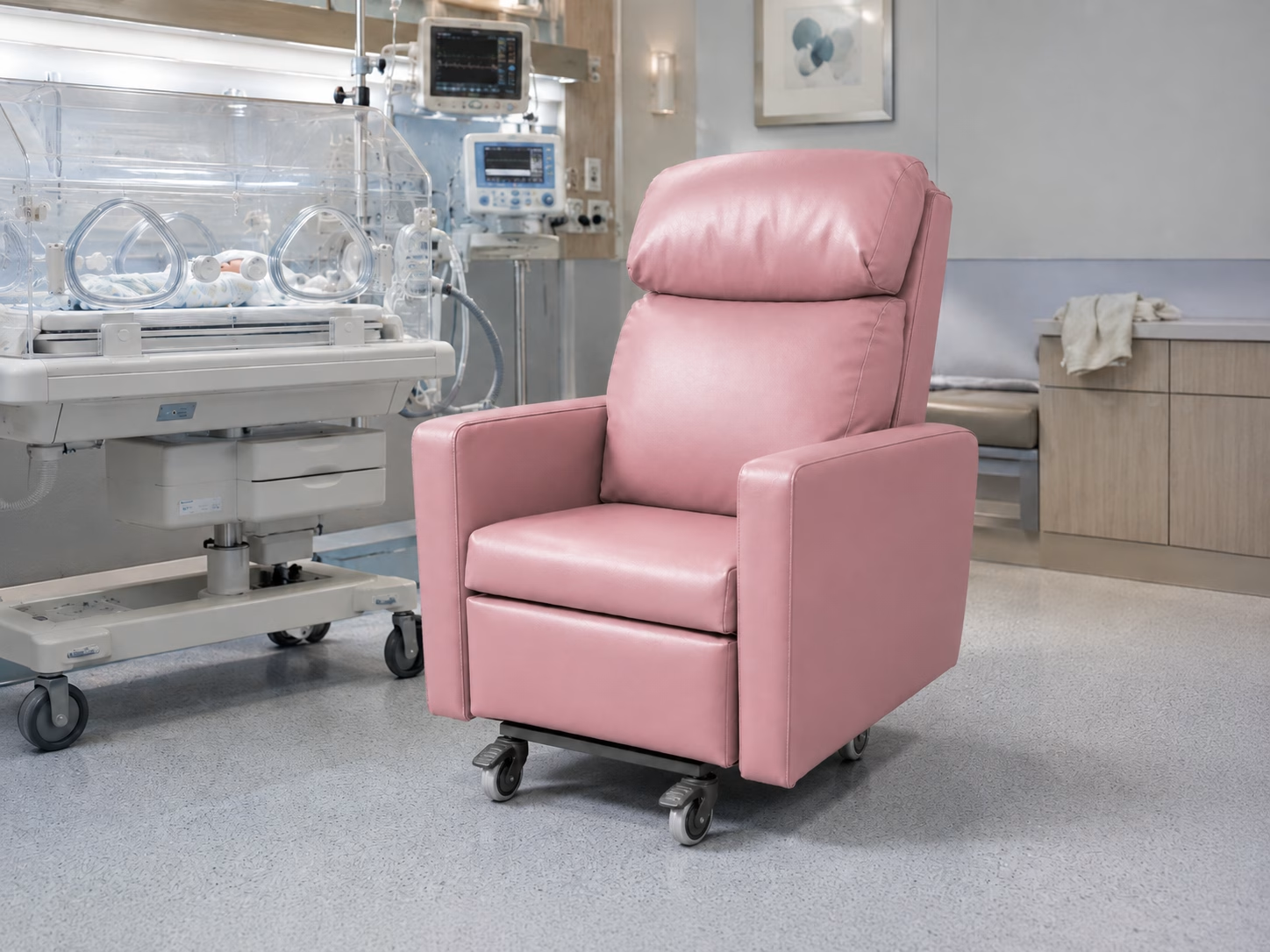
A maternity chair needs to work for the parent, baby, staff and room. Colour and shape matter in a welcoming ward, but they do not show how someone will sit down, feed, stand, clean the chair or move around it during daily care. A small trial with the people who use and maintain the room can answer more than a catalogue photograph.
Novacorr’s Novamed Breastfeeding Chair range includes Standard, Wide and Electric models. The exact sizes, functions, upholstery and configuration should be confirmed for a quote. The range is designed for maternity, neonatal and parent-room settings; each site should assess its own clinical and operational requirements.
Watch a parent use the chair
Trial the seat height and depth, back support, arms and movement with people of different sizes where practical. Can a parent sit and stand comfortably while holding a baby with appropriate support? Does the chair allow room for preferred feeding positions and cushions? Is there a clear place for personal belongings and a support person? Record feedback from parents and staff without assuming one position suits everyone.
If a rocking or electric function is under consideration, test the actual proposed model. Check control reach and operation, how it moves in the available space, and whether staff can assist when needed. The treating team should assess any individual clinical need; a procurement guide cannot prescribe a chair for every parent.
Test the room layout
Measure the footprint in use, not only while the chair is still. Include the bed, cot, bedside furniture, staff circulation, cleaning access and power for an electric model. Try a typical bedside layout and a smaller room. Ask whether the same chair is intended for a ward, neonatal unit, family space or public parent room; the use pattern and access requirements may differ.
Ask cleaning and facilities teams early
Request the care instructions for the selected upholstery and test the facility’s approved cleaning process against them. Look at seams, contact surfaces, access beneath the chair and how the mechanism can be inspected. Confirm what service support, replacement components and warranty apply to the quoted configuration. Do not assume every fabric can be cleaned with every chemical or that every part can be replaced on every model.
Novacorr’s hospital and health systems information provides a broader procurement route. The existing maternity article introduces the chair’s role in care settings; this checklist focuses on purchase testing and the decision record.
Request a comparable quote
Give suppliers the number of chairs, model and size requirements, upholstery type, preferred finishes, electrical needs, delivery locations, cleaning protocol and service expectations. Ask for dimensions, operation guidance, warranty and lead time for each option. A representative trial can flag differences before a larger order. Where a hospital has permitted Novacorr to share its seating experience, treat that as a reference for questions to ask, not a guarantee of the same result at a new site.
Contact Novacorr with your unit’s room types, quantities and timeline to discuss samples, configuration and pricing.
Frequently asked questions
Do all maternity rooms need an electric chair?
No. Compare the Standard, Wide and Electric models against the users, room and care tasks. The appropriate choice may vary between spaces.
Can one upholstery work across a whole hospital?
It may simplify maintenance, but first confirm the material’s cleaning guidance, comfort and suitability for each setting with the facility team.
What should be recorded from a chair trial?
The exact model and upholstery, room dimensions, who tested it, parent and staff feedback, cleaning observations and issues that remain unresolved.