

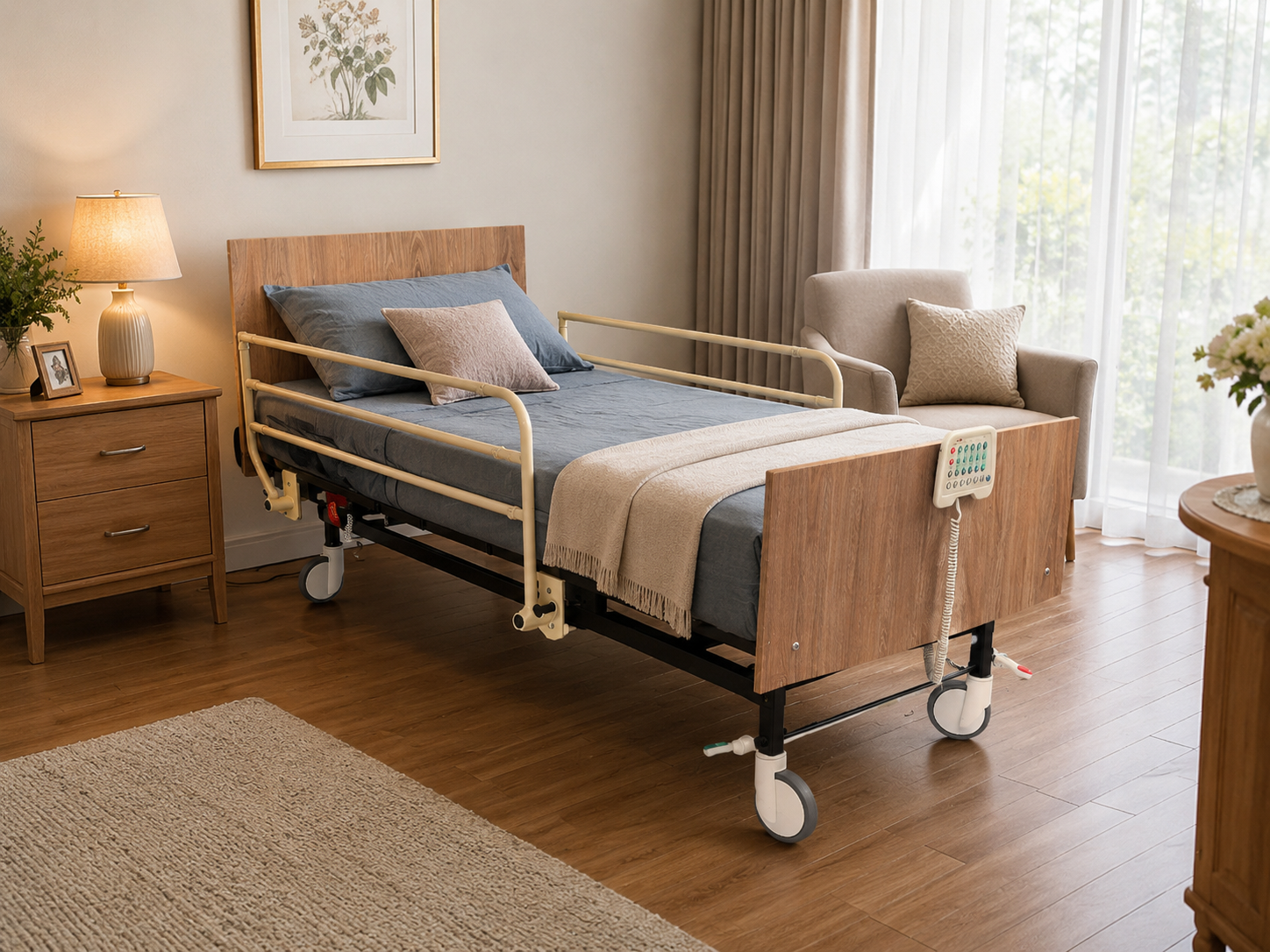
A low bed setting, a useful transfer height and space for a hoist are three different measurements. A specification that solves one can complicate another. The resident’s transfer method, mattress and actual room should guide the choice, with the treating team deciding what is clinically appropriate.
Novacorr supplies beds and furniture for aged care and offers a custom HiLo bed for individually scripted needs. Check the exact height range, castors, mattress and underbed clearance for the quoted configuration. A nominal product height is not enough to decide suitability.
Measure the surface the resident actually uses
The bed base’s lowest height is measured differently from the top of the mattress. Add the selected mattress and any overlay to estimate sitting and transfer height, then confirm it in a trial. Record whether the resident stands, pivots, uses a wheelchair, transfers laterally or needs a hoist. Compare the heights at the start and end of each transfer rather than looking only at the bed’s lowest position.
A low setting may be part of a resident’s falls-risk plan, but it cannot be promised to prevent a fall or injury. Consider the person’s mobility, ability to get up, floor surface, supervision and the facility’s wider care plan. If the lowest setting makes a normal transfer harder, the team may need a different routine or configuration.
Check staff working height separately
The team may need to raise the bed for care, repositioning or cleaning. Observe whether the working height suits the actual tasks and carers without obstructing furniture or equipment. Confirm who operates the controls, whether the resident can reach them, and how the bed is returned to the agreed position after care. A training and handover plan can matter as much as the written height range.
Measure the exact hoist and room
Bring the hoist make and model, base leg spread and required clearance to the assessment. Test whether it fits beneath the proposed bed at the required height and whether it can turn in the room. Castors, bed base design, accessories and power leads can change the available path. Include the doorway, bedside table, partner chair and space for supporters. The clinical team should confirm the transfer technique and staffing; a brochure photograph does not establish safe hoist access.
Trial and document the trade-offs
Ask the resident and team to test typical bed entry, exit, care and hoist tasks in a representative room. Record the exact bed and mattress tested, effective transfer height, clearance, unresolved issues and any different configuration proposed for purchase. Our aged-care bed selection guide provides the broader facility pathway until the related article is published; a clinical custom bed assessment can help define exceptions.
Contact Novacorr with bed, mattress, hoist and room dimensions to discuss technical options and a facility quote. The treating team should assess the final setup for the resident.
Frequently asked questions
Is the lowest bed always best for falls risk?
No. The team must weigh the resident’s mobility, transfer method, mattress and wider care plan. No bed height alone prevents falls.
Does a bed with wheels automatically allow hoist access?
No. Underbed clearance, hoist leg dimensions and turning space need to be checked together on the exact setup.
Can the same height setting suit every resident?
No. A common bed model may support a facility standard, but transfer and care heights remain person-specific.