

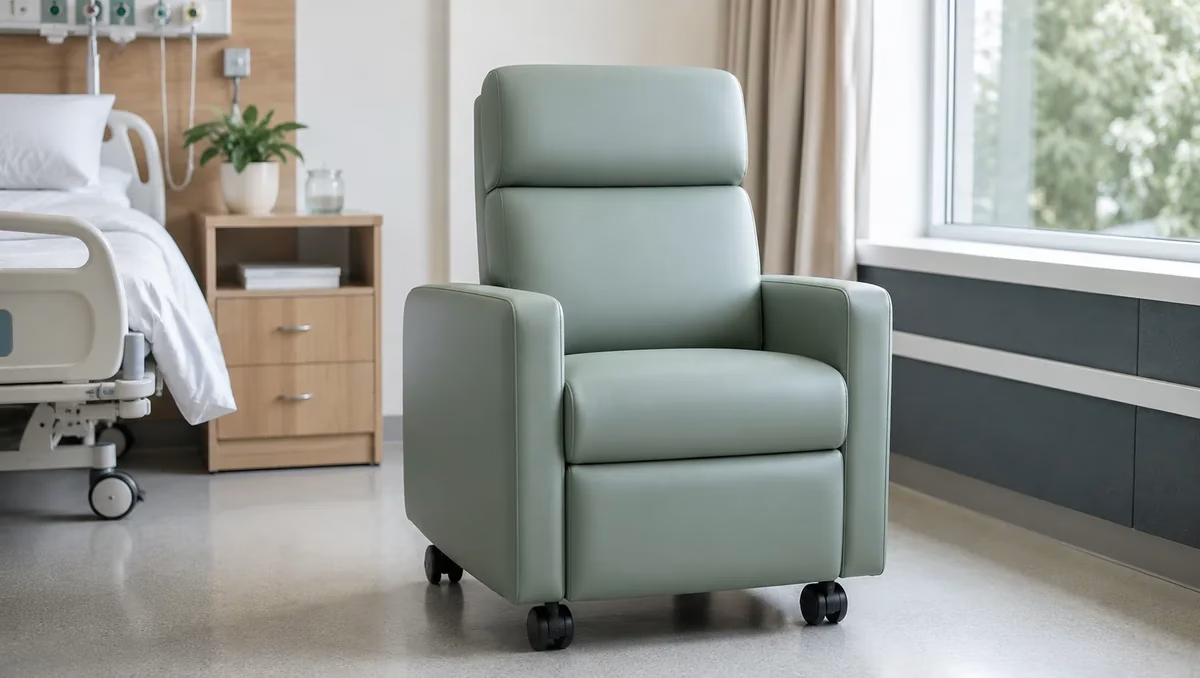
A hospital patient recliner should be selected against the intended clinical setting, patient fit, staff workflow, cleaning regime and procurement requirements. A chair that works in a day treatment bay may be a poor match for a compact ward room or a rehabilitation area. Start with the use case, then test the proposed chair with the people who will use and maintain it.
This guide is for Nurse Unit Managers, occupational therapists, facilities and procurement teams. Novacorr designs and manufactures healthcare furniture in Queensland, including the Novamed Patient Recliner Chair. Product selection and clinical suitability remain decisions for the health service and its treating team.
Define the job before comparing chairs
Is the recliner for short observation, a lengthy seated treatment, recovery, a patient room, or a flexible bay that changes function? Record how long people are likely to sit, what assistance they need to transfer, whether they need to recline, and which staff tasks must take place alongside the chair. Include visitors, cleaning and equipment movement in the room plan. This brief makes it easier to compare models on the same terms.
What should a hospital team assess?
Fit, transfers and positioning
Check seat width, depth and height, arm support, foot support and the person’s ability to use the recline mechanism. An OT or relevant clinician can assess transfer method and positioning for the intended patient group. Avoid assuming that one seat size or recline angle suits every patient. If bariatric use is anticipated, request the exact safe working load, dimensions and component limits for the proposed specification; user weight alone is not the whole assessment.
Space and staff access
Measure the chair in its upright and reclined positions in the actual room layout. Account for doors, bed clearance, circulation paths, clinical equipment, carers on either side and any planned wheelchair or hoist transfers. Check whether castors, brakes and moving parts can be reached in everyday use. A floor plan is useful, but a site trial or mock-up can reveal obstructions it misses.
Upholstery and cleaning
Ask the infection prevention and cleaning teams to review the proposed material, seams, contact surfaces and manufacturer care instructions against the facility’s actual cleaning products and procedures. The Novamed recliner page describes full hospital-grade vinyl and a multi-stretch contact-surface option. These materials differ in feel and care requirements; confirm the exact upholstery in the quote. Do not treat a material label by itself as proof of compatibility with every disinfectant.
Durability, service and documentation
Procurement should request a current specification, dimensions, safe working load, warranty terms, cleaning guidance, spare-part availability and service pathway for the exact chair proposed. Facilities teams may need information about castors, upholstery and replacement components over the expected asset life. Confirm lead times and any project-specific dimensions or finishes in writing. Novacorr’s ward and clinical furniture range outlines the documentation available on request.
A practical trial for the ward or treatment area
Ask a small group of relevant staff and clinicians to use the chair in the intended room. Observe transfer space, brake access, recline operation, upholstery contact points and cleaning access. Capture what was tested and what remains uncertain. If a patient or consumer representative participates, record their comfort and usability feedback without treating one person’s experience as a clinical result for everyone.
- Clinical lead: Does the chair support the assessed use and transfer approach?
- Nurse Unit Manager: Can staff position, move and clean it within normal workflow?
- Facilities and cleaning: Are access, materials and maintenance instructions practical?
- Procurement: Are the specification, price, warranty, supply and service details documented?
For broader product context, review the Novamed healthcare furniture range and Novacorr’s hospital and health systems capability. A patient recliner may sit alongside a bed, bedside unit or family seating in a room-wide project; those items should be evaluated as a coordinated layout, not assumed to have identical requirements.
For a different hospital seating project, the published Latrobe Regional Health breastfeeding chair experience highlights client comfort and cleaning as selection priorities. Its chair and setting differ from a patient recliner, so the example is context for procurement discussions, not evidence of recliner performance.
How to request a comparable quote
Send the room type, anticipated use, quantities, dimensions, upholstery and finish preferences, access constraints and required documentation. State which points are mandatory and which may be changed after a trial. Novacorr can discuss the Patient Recliner configuration and manufacturing options for the project; the health service should confirm its own clinical and procurement approvals. Contact Novacorr for hospital recliner specifications or a project quote.
Frequently asked questions
Is a patient recliner the same as a lift chair?
No. Products vary in their intended functions and configurations. Check the actual recline and transfer features of the quoted model rather than assuming a patient recliner provides a powered lift function.
Can the upholstery be specified for a facility?
Novacorr lists hospital-grade vinyl and a multi-stretch contact-surface option for its Patient Recliner Chair. Confirm the available colours, cleaning guidance and exact material with the manufacturer for the proposed order.
What is the first step for a multi-room purchase?
Prepare a room schedule and a common selection brief, then identify any rooms that need different dimensions, finishes or clinical review. Ask for current specifications and a trial or sample process suited to the procurement.